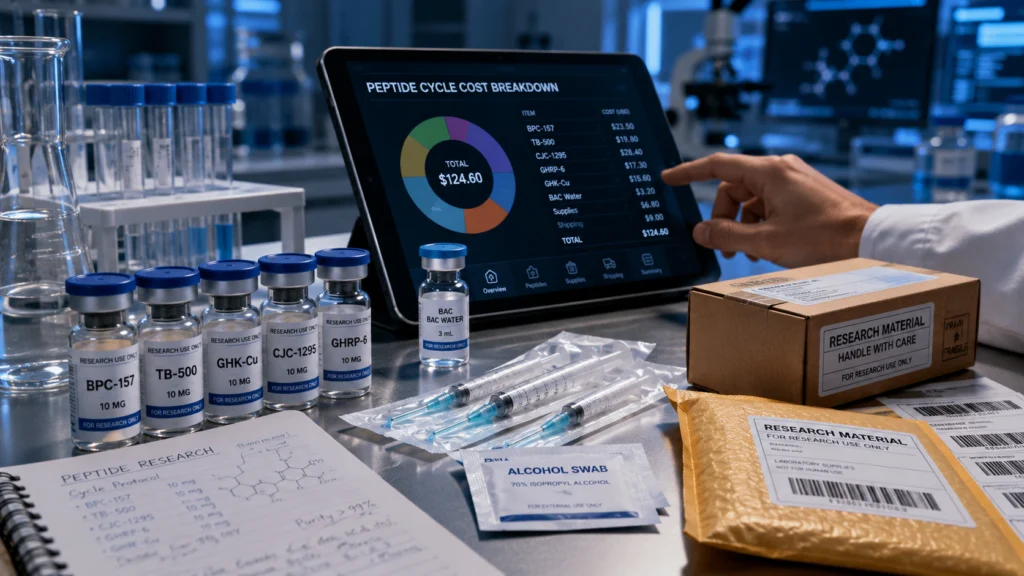
A peptide cycle cost includes much more than the price shown on a compound vial. Researchers may also need to budget for consumables, storage, shipping, testing documents, and unexpected fees.
Calculating the full cost before ordering makes planning easier. It also reduces the chance of running short on materials halfway through a research project.
What Does a Peptide Cycle Cost Include?
A complete research budget usually includes five main cost areas:
| Cost Area | What It May Include |
|---|---|
| Compound cost | Peptide vials and required quantities |
| Consumables | Water, syringes, needles, swabs, tubes, and sharps containers |
| Storage | Refrigerator, freezer space, temperature monitoring, and containers |
| Shipping | Delivery charges, cold packaging, import duties, and taxes |
| Extra budget | Replacement materials, damaged shipments, or price changes |
The compound is often the largest expense. However, smaller costs can become significant across a longer research period.
Calculate the Compound Cost First
Start by calculating how much peptide the full project requires.
The basic formula is:
Total compound cost = number of vials required × price per vial
Vial prices can vary by compound, vial size, purity, supplier, and order quantity. Longer or more complex peptide sequences may also cost more to produce.
Larger vials sometimes reduce the cost per milligram. However, only buy quantities that match the research plan and available storage conditions.
The free Peptide Cycle Cost Estimator calculates the required number of vials and total compound cost automatically.
The Peptide Vial Yield and Cycle Supply Calculator can also help estimate how long each vial may last.
Consumables Can Increase the Total
Consumables are easy to overlook because each item may appear inexpensive.
Depending on the research setup, costs may include:
- bacteriostatic water or another suitable solvent
- syringes and needles
- alcohol swabs
- sample tubes
- gloves
- labels
- sharps disposal containers
These supplies may need to be replaced throughout the project. Therefore, calculate the cost per use and multiply it by the total number of planned research sessions.
If several compounds are being studied, each one may require separate supplies. This can quickly increase the total budget.
Used sharps also require suitable disposal. The CDC/NIOSH sharps disposal guidance explains why sharps should be placed in proper containers rather than normal waste.
Storage and Equipment Costs
Peptides can have different storage needs. Always follow the supplier’s product-specific instructions.
Storage costs may include:
- refrigerator or freezer space
- temperature-monitoring equipment
- suitable storage containers
- backup power or emergency storage
- replacement material after a storage failure
General peptide-handling guidance often recommends keeping lyophilised peptides cold and protected from bright light. However, exact storage conditions depend on the peptide sequence and product.
For more detail, review the GenScript peptide storage and handling guide and the Sigma-Aldrich peptide handling guidance.
Shipping, Taxes, and Import Fees
Shipping can add a noticeable amount to the final peptide cycle cost.
Possible charges include:
- standard or express delivery
- cold-pack packaging
- insurance
- import duties
- customs handling fees
- local taxes
International orders can be harder to estimate because customs charges may vary. Add a small buffer when ordering from a new supplier or importing research materials.
Also check the supplier’s replacement policy. A cheaper order may become expensive if damaged or delayed materials are not covered.
Peptide Cycle Cost Example
The example below is hypothetical. It shows how smaller expenses can change the total budget.
| Item | Example Calculation | Cost |
| Compound | 5 vials × $120 | $600 |
| Consumables | Estimated total | $85 |
| Storage allocation | Estimated total | $40 |
| Shipping | Estimated total | $55 |
| Subtotal | $780 | |
| Contingency budget | 10% of subtotal | $78 |
| Estimated total | $858 |
The vial price alone suggests a $600 project. After including other expenses, the estimated total becomes $858.
This is why the full budget should be calculated before purchasing materials.
When Bulk Purchasing May Save Money
Bulk purchasing can reduce the price per vial or milligram. However, a larger order is not always the cheapest option overall.
Before buying in bulk, check:
- whether the materials can be stored correctly
- whether the supplier is reliable
- whether certificates and batch information are available
- whether the full quantity will be used
- whether shipping or import costs increase with order size
Poor storage or unused materials can remove any savings from a bulk discount.
Add a Contingency Budget
Research plans do not always go exactly as expected.
A small contingency budget can cover:
- replacement consumables
- damaged deliveries
- supplier price changes
- extra shipping
- additional storage needs
- repeated testing
Adding around 5% to 10% to the estimated budget can make planning more realistic.
Estimate the Full Research Budget For Peptide Cycle Cost
The easiest way to avoid unexpected costs is to calculate every expense before ordering.
Use the Peptide Cycle Cost Estimator to enter the vial size, required quantity, project length, and vial price. The tool calculates the number of vials required and the estimated compound cost.
After that, add consumables, storage, shipping, taxes, and a contingency amount to estimate the complete research budget.
Frequently Asked Questions
What is included in the peptide cycle cost?
A peptide cycle cost may include compounds, consumables, storage, shipping, taxes, and replacement materials. The vial price is only one part of the total budget.
How do I calculate the total research cost?
Multiply the number of required vials by the price per vial. Then add consumables, shipping, storage, taxes, and a small contingency budget.
Use the Peptide Cycle Cost Estimator to calculate the estimated compound cost.
Why is the vial price not the final cost?
Researchers may also need supplies such as solvents, syringes, labels, gloves, storage equipment, and suitable waste-disposal containers. These smaller costs can add up over time.
Should shipping and import fees be included?
Yes. Shipping, customs charges, insurance, taxes, and cold packaging can increase the final research budget.
Does buying peptide vials in bulk always save money?
Not always. Bulk purchasing may reduce the cost per vial, but savings can disappear if materials expire, storage fails, or the full quantity is not required.
How much extra budget should researchers add?
Adding a contingency amount of around 5% to 10% can help cover unexpected shipping, replacement supplies, or price changes.
Why do storage costs matter?
Some research materials require controlled temperatures and suitable storage containers. Poor storage may damage materials and increase the total project cost.
What is the best way to compare supplier prices?
Compare the cost per milligram, vial size, purity information, testing documents, shipping fees, and replacement policy. Do not compare suppliers using vial price alone.