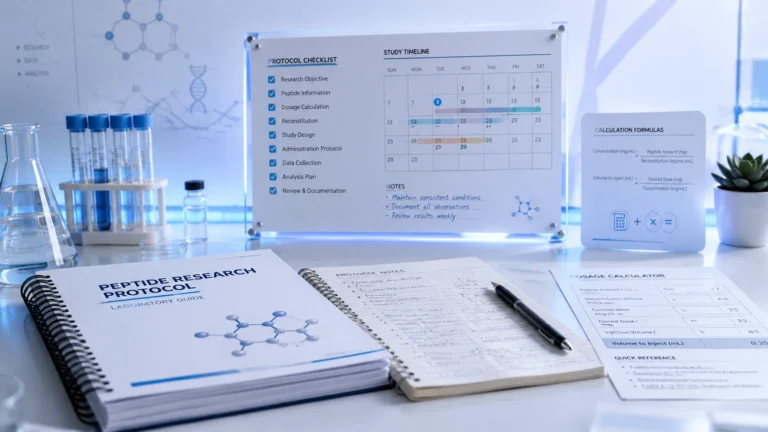
Building a Peptide Research Protocol: A Step-by-Step Planning Guide
A practical step-by-step guide to building a peptide research protocol, covering question definition, dose calculation, cycle planning, reconstitution, controls, and documentation.
Practical guides, dosing references and reconstitution tips written for researchers.
A practical step-by-step guide to building a peptide research protocol, covering question definition, dose calculation, cycle planning, reconstitution, controls, and documentation.
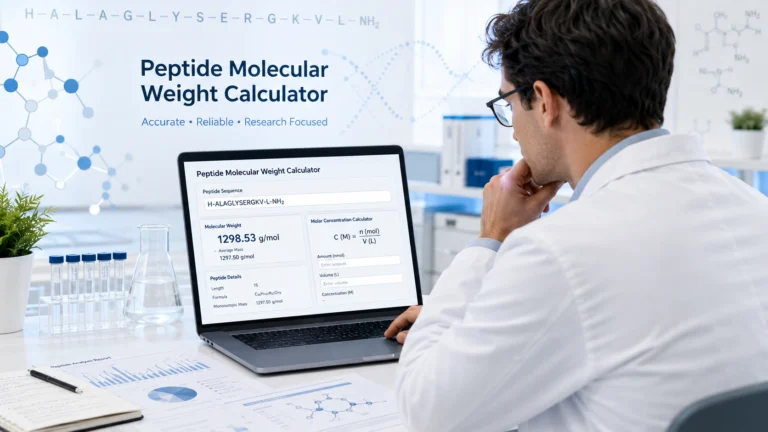
Explains why molecular weight matters in peptide research, how mass and molar dosing differ, and when calculating molecular weight is essential for meaningful research design.
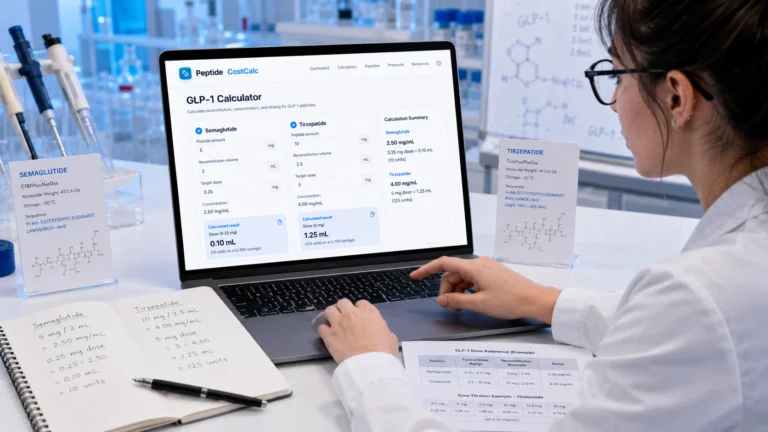
A research-focused comparison of semaglutide and tirzepatide covering mechanism differences, clinical trial data, GIP receptor biology, and dosing considerations.
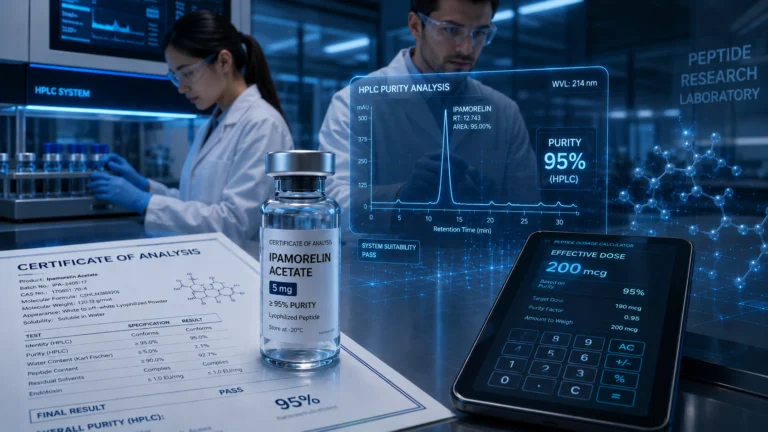
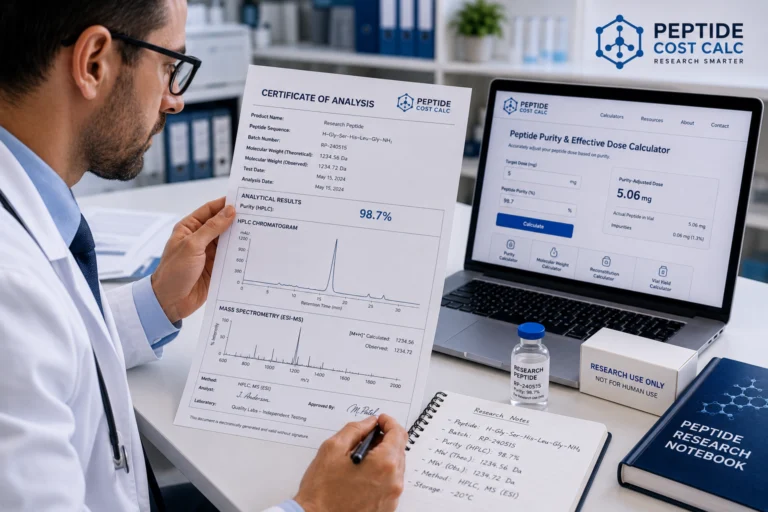
Explains how peptide purity percentage affects your actual effective dose and why correcting for purity matters in research calculations, with practical examples.
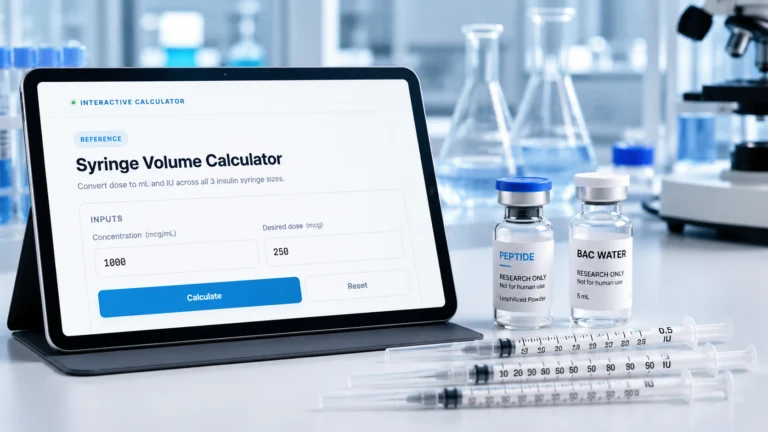
A practical guide to selecting and using syringes for peptide research — covering insulin syringe sizing, IU to volume conversions, needle gauge, and avoiding measurement errors.
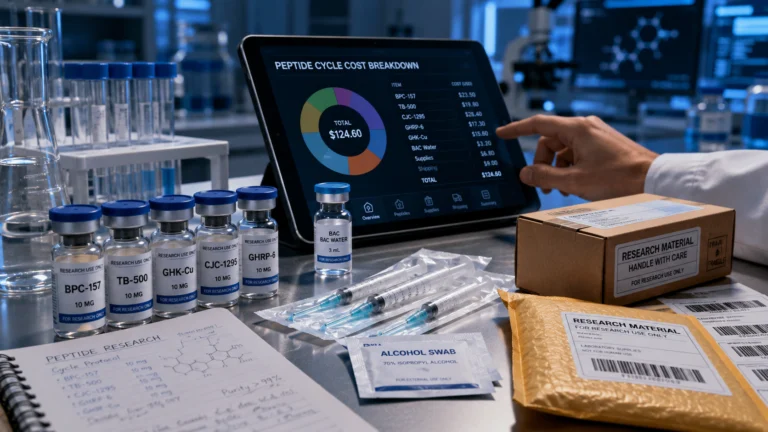
A complete breakdown of what a peptide research cycle actually costs, covering compound pricing, consumables, storage, and shipping — with worked examples and budgeting tips.
A practical guide to understanding peptide certificates of analysis — purity, HPLC chromatograms, mass spectrometry, and how to spot quality issues before they affect your research.
A clear breakdown of the difference between bacteriostatic water and sterile water for peptide reconstitution, with guidance on which to use and when.
A clear explanation of peptide half-life, steady state, and why dosing timing directly affects research outcomes. Includes practical guidance on choosing dosing intervals.