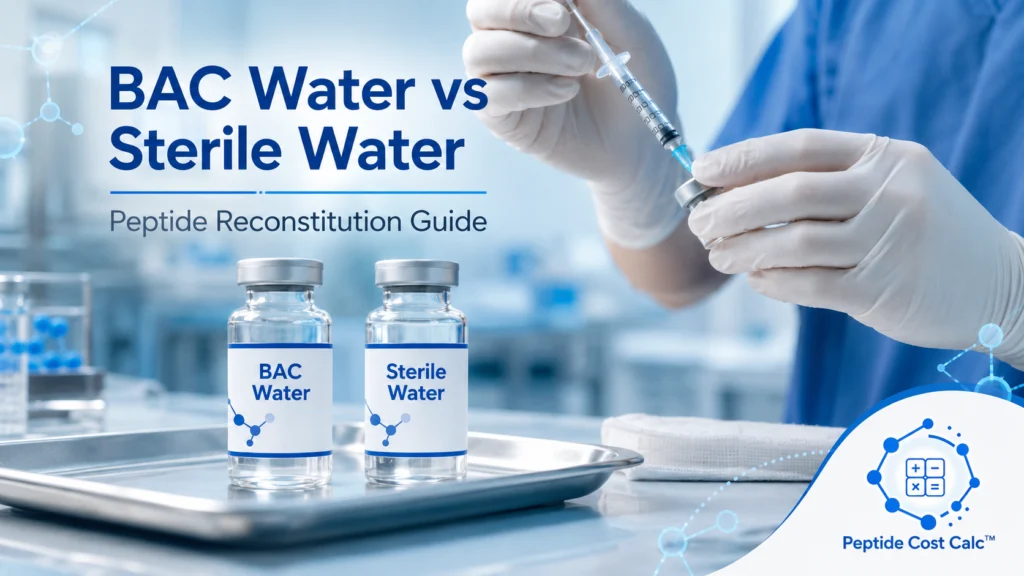
BAC water vs sterile water is an important difference in peptide reconstitution. Both look similar in the vial, but they do not work the same way after opening.
BAC water contains a preservative. Sterile water does not. That one difference changes how researchers handle the vial, how often they can access it, and how they think about contamination risk in peptide research.
This guide explains the difference in simple terms. It also keeps the focus on research handling, storage, and reconstitution planning.
BAC Water vs Sterile Water: The Core Difference Is Preservation
Bacteriostatic water, often called BAC water, contains sterile water plus benzyl alcohol. The benzyl alcohol acts as a preservative.
This preservative helps slow bacterial growth after a needle punctures the vial. Because of that, researchers often use BAC water when a protocol needs repeated withdrawals from the same vial.
Official labeling for bacteriostatic water for injection describes it as sterile water with benzyl alcohol added as a bacteriostatic preservative.
Sterile water works differently. It contains no bacteriostat, antimicrobial agent, or added preservative. DailyMed also notes that sterile water for injection is intended for single-dose use after mixing with a suitable solute or solution.
That is the main answer in the BAC water vs sterile water comparison: BAC water supports multi-access handling better, while sterile water suits single-use situations.
Why BAC Water vs Sterile Water Matters for Peptide Research
Most research peptides arrive as lyophilized powder. Researchers then add a reconstitution liquid to create a working solution.
This step affects concentration, handling, storage, and repeat access. So, the liquid choice matters.
BAC water usually makes more sense when a research workflow needs several withdrawals over time. The preservative helps reduce microbial growth risk after the vial has already been punctured.
Sterile water can work for immediate-use preparation. However, it does not give the same preservative support after opening. That makes it less suitable for repeated vial access.
This is why BAC water vs sterile water is not just a naming issue. It affects how researchers plan vial use, storage time, and contamination control.
When Sterile Water Is Appropriate
Sterile water still has a place in research preparation. It may suit single-use reconstitution when the full prepared amount will be used immediately in the intended research setup.
It can also appear in protocols where benzyl alcohol does not fit the compound or method. Compatibility depends on the compound, solvent system, and protocol notes.
Sterile water may also be easier to source in some markets. Still, researchers should not treat it like BAC water. Once opened, it has no preservative support.
For research planning, the safer rule is simple: use sterile water only when the protocol supports immediate or single-use handling.
A Note on Acetic Acid
Some peptides do not dissolve well in plain water. This can apply to certain peptide classes that need help with solubility.
In those cases, a protocol may call for dilute acetic acid first. The acid helps dissolve the compound before further dilution to the working concentration.
This does not mean acetic acid replaces every reconstitution liquid. It only solves a specific solubility problem. Researchers should follow compound-specific literature and protocol notes before choosing any solvent system.
Storage Temperatures Matter Too
Storage matters whether the protocol uses BAC water or sterile water. Poor storage can weaken the value of a good reconstitution plan.
Most peptide research workflows use refrigerated storage after reconstitution. Many protocols refer to a 2°C to 8°C range. Light, heat, and repeated temperature changes can create problems.
Do not freeze a reconstituted peptide solution unless the compound-specific protocol supports it. Freezing can affect solution quality and may damage sensitive compounds.
The BAC water vs sterile water decision helps with handling, but storage still needs care. Clean technique, correct temperature, and clear labeling all matter.
BAC Water vs Sterile Water: The Practical Summary
For many multi-access peptide research setups, BAC water is the better choice. It contains benzyl alcohol, which helps preserve the vial after puncture.
Sterile water is different. It has no preservative and fits single-use or immediate-use situations better.
So, the practical answer is clear: choose BAC water when repeated vial access matters, and choose sterile water only when the protocol calls for single-use handling or avoids benzyl alcohol.
The best choice also depends on the peptide, research protocol, and compatibility notes. When in doubt, check the compound-specific literature before preparing the vial.
Calculate Your Reconstitution Volume
Once you have the right water type, use the free BAC water reconstitution calculator to find the exact volume for your target concentration and vial size.