Bacteriostatic Water for Peptides: The Complete Guide
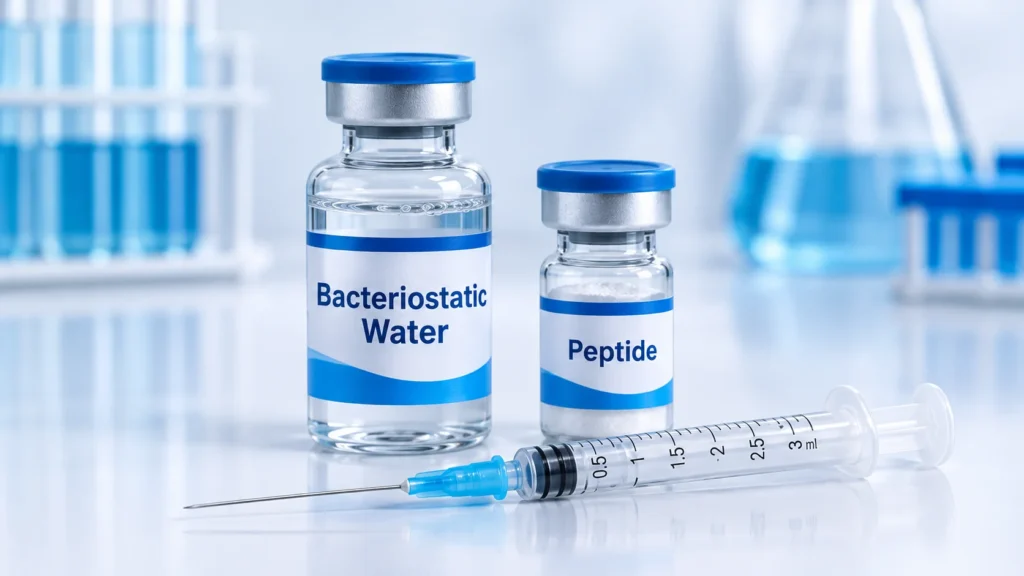
If you have bought a peptide, you were almost certainly told you need bacteriostatic water to go with it, but rarely why, how much, or how long it lasts. Bacteriostatic water for peptides is the quiet workhorse of the whole process, and getting it right is the difference between a vial you can use for weeks and one you have to throw away.
This guide covers what it is, why peptides need it, how much to add, how long it keeps, and what to look for when you buy it.
Quick Answer
Bacteriostatic water is sterile water with 0.9% benzyl alcohol added as a preservative. For peptides it is the standard diluent, because that preservative lets you draw from the same vial repeatedly over several weeks, usually up to 28 days after the first puncture when refrigerated.
Peptide Reconstitution Calculator (Bac Water) Enter the vial size, the BAC water you added and the dose to get the exact syringe draw, or work out how much water gives a target concentration.What Is Bacteriostatic Water?
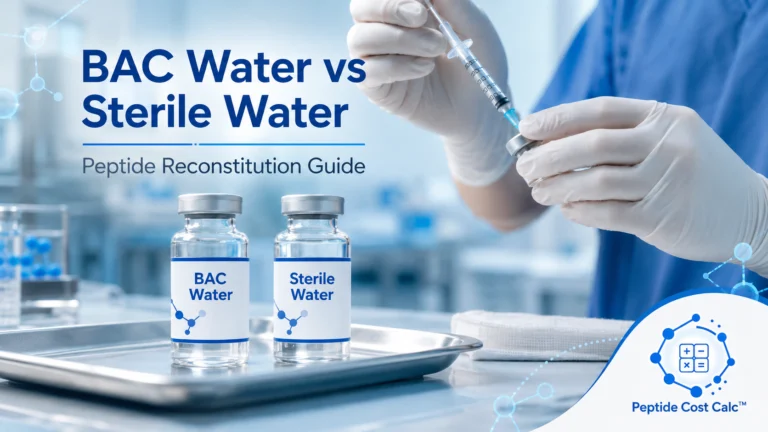
Bacteriostatic water is purified, sterile water with one addition: roughly 0.9 percent benzyl alcohol (about 9 mg per mL). Benzyl alcohol is a bacteriostatic agent, which means it stops bacteria from multiplying inside the vial once a needle has broken the seal. It does not sterilise a contaminated solution; it keeps a clean one from spoiling.
That is the whole difference between it and plain sterile water, and it is the reason bacteriostatic water suits multi-use vials. For a full side-by-side with sterile water and reconstitution solution, see our guide on bacteriostatic water vs reconstitution solution.
Why Peptides Use Bacteriostatic Water
A peptide vial is almost never a single-use item. You reconstitute it once, then draw from it many times across days or weeks. So do you need bacteriostatic water for peptides? For any vial used over more than one session, yes. The preservative is what makes repeated entry safe, which is exactly how peptides are handled. Plain sterile water, with no preservative, would leave the solution unprotected the moment you first drew from it.
How Much Bacteriostatic Water Do You Add?
This is the question people overthink, and there is no single right number. The volume you add sets the concentration, and the concentration decides how much you draw for a given dose. Add more water and each dose is a larger draw; add less and it is more concentrated, so each dose is smaller.
Because it depends on the peptide amount and the concentration you want, the sensible move is to calculate it rather than guess. Our BAC Water Calculator gives the exact volume for a target concentration, and the KLOW Blend Calculator does the same for that blend. Decide the volume before you pick up the syringe.
How Long Does Bacteriostatic Water Last?
Unopened, bacteriostatic water keeps until its printed expiry. The clock that matters is the one that starts at the first puncture. How long is bacteriostatic water good for once opened? Most labels say up to 28 days after the first entry when refrigerated, thanks to the benzyl alcohol. After that window the preservative is no longer relied upon and the vial should be discarded. Keep in mind that the reconstituted peptide itself often has a shorter stability window than the water, so treat the peptide’s shelf life as the real limit.
How to Use It to Reconstitute a Peptide
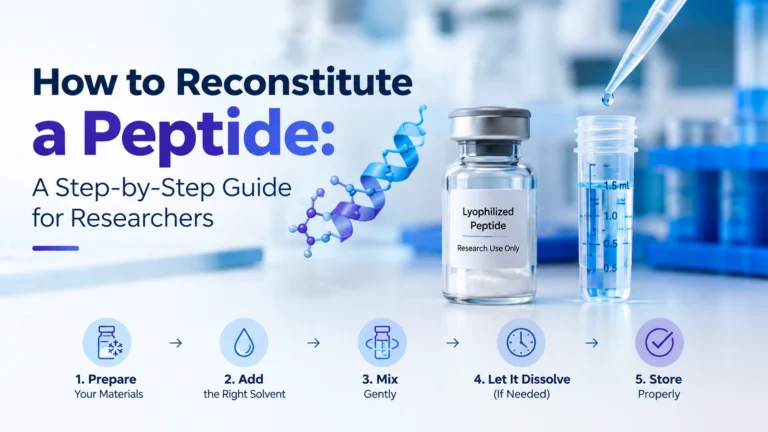
The handling is simple but not forgiving. Swab both stoppers, draw your calculated volume of bacteriostatic water, and let it run slowly down the inner wall of the peptide vial rather than blasting it onto the powder. Then swirl gently, never shake, until the powder dissolves. For the full step-by-step, including why shaking damages peptides, see our guide on how to reconstitute peptides.
What to Look For When Buying Bacteriostatic Water
Rather than naming sellers, it is more useful to know what the best bacteriostatic water for peptides has in common. Look for a sealed, sterile multi-dose vial that clearly lists 0.9% benzyl alcohol as the only additive. Pharmaceutical or USP grade is the standard to expect. The seal should be intact, the liquid clear and colourless, and the label should state a batch and expiry. If a product does not say what is in it, or the water is cloudy or discoloured, do not use it. These simple checks matter more than the brand name on the vial.
Safety and Benzyl Alcohol
The same preservative that makes bacteriostatic water convenient also sets its limits. Benzyl alcohol is not suitable for newborns, and because there is a ceiling on how much benzyl alcohol is considered safe in a given period, very large volumes are where sterile water is sometimes preferred instead. For ordinary small-volume peptide reconstitution this is rarely a concern, but it is the reason bacteriostatic water is not simply used for everything. Treat these as research-handling notes, not medical advice.
The Bottom Line
Bacteriostatic water for peptides earns its place for one reason: the 0.9% benzyl alcohol preservative that lets you use a vial again and again for up to about 28 days. Calculate the volume you add rather than guessing, store the vial cold, check the label before you buy, and let the reconstitution guide and calculators handle the detail. Get the water right and the rest of the process gets a lot easier.
Frequently Asked Questions
What is bacteriostatic water for peptides?
It is sterile water with 0.9% benzyl alcohol added as a preservative, used to dissolve peptides so the vial can be drawn from repeatedly over several weeks.
Do you need bacteriostatic water for peptides?
For any peptide vial used across more than one session, yes. The preservative allows repeated draws, which plain sterile water cannot safely support.
How long does bacteriostatic water last once opened?
Most labels say up to 28 days after the first puncture when refrigerated. The reconstituted peptide often has a shorter window, so follow the peptide’s limit.
How much bacteriostatic water do you add to a peptide?
It depends on the peptide amount and the concentration you want. Use a bacteriostatic water calculator to get the exact volume instead of estimating.
What should I look for when buying bacteriostatic water?
A sealed, sterile multi-dose vial listing 0.9% benzyl alcohol as the only additive, pharmaceutical or USP grade, with a clear colourless liquid and a batch and expiry on the label.
Work Out Your Bacteriostatic Water Volume
Once you know which water you are using, the free BAC water reconstitution calculator gives the exact volume to add for your target concentration and vial size.
Disclaimer: This article is for general informational and research purposes only and is not medical advice. Peptides referenced are research compounds. Sources: Bacteriostatic Water for Injection labeling (NIH DailyMed), benzyl alcohol monograph (PubChem, NIH), and USP water-for-injection standards. See our Sources and Methodology page.
About the editor

All content is for educational reference only. Consult a qualified professional before making any decisions based on information presented here. Medical disclaimer