Bac Water vs Reconstitution Solution: What’s the Difference?
If you have ever stared at three near-identical vials of clear liquid and wondered which one actually belongs with your peptide vial, you are not alone. The bacteriostatic water vs reconstitution solution question trips up almost everyone new to peptide handling, and sterile water only adds to the confusion. They all look the same. They do not behave the same.
The short version: they differ by what is dissolved in the water and how many times you can safely draw from the vial.
Quick Answer
Bacteriostatic water is sterile water with 0.9% benzyl alcohol added as a preservative, so it can be entered many times over several weeks. Sterile water has no preservative and is meant for a single use. “Reconstitution solution” is usually just bacteriostatic water sold under another name.
Here is how the common diluents line up at a glance.
| Diluent | What it contains | Preservative? | Multi-use? | Typical use |
|---|---|---|---|---|
| Bacteriostatic water | Sterile water + 0.9% benzyl alcohol | Yes | Yes (about 28 days) | Multi-dose peptide vials |
| Reconstitution solution | Usually bacteriostatic water (check label) | Usually yes | Usually yes | Marketed for peptides |
| Sterile water | Water only | No | No (single use) | Single large-volume mixing |
| Bacteriostatic saline | Saline + preservative | Yes | Yes | Some injections |
| Deionized/distilled water | Non-sterile water | No | No | Not for injection |
What Is Bacteriostatic Water?
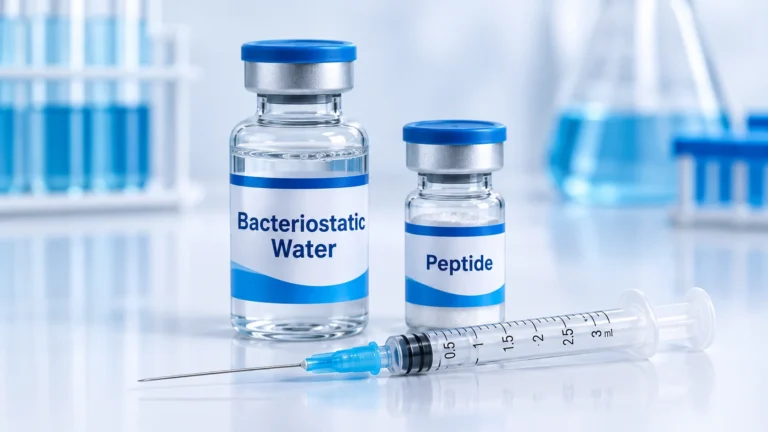
Bacteriostatic water is simply sterile water with a small amount of benzyl alcohol added, usually 0.9 percent (9 mg per mL). That benzyl alcohol is a bacteriostatic agent, which means it slows or stops bacteria from multiplying inside the vial. It does not sterilise anything that is already contaminated; it keeps the water from becoming a breeding ground once you push a needle through the stopper.
That single ingredient is why bacteriostatic water is the default for peptide work. A typical peptide vial is reconstituted once and then drawn from repeatedly across many days. The preservative lets you re-enter the same vial again and again without the solution spoiling. Most product labeling says to discard bacteriostatic water within 28 days of the first puncture, kept refrigerated. For that one diluent on its own – how much to add, how long it keeps and what to look for when buying it – see our complete guide to bacteriostatic water for peptides.
What Is Reconstitution Solution?
This is where most of the confusion lives. “Reconstitution solution” is a marketing name, not a strict pharmaceutical category. So what is the difference between bacteriostatic water and reconstitution solution? In the large majority of cases, there is none worth worrying about. Most products sold to researchers as reconstitution solution are bacteriostatic water, the same 0.9% benzyl alcohol formula, under a friendlier label.
A few reconstitution products are different. Some use a mild acetic acid solution to help stubborn, poorly soluble peptides dissolve. A handful are buffered. The only reliable way to know what you have is to read the ingredient list on the label. If it lists benzyl alcohol and nothing else of note, you are holding bacteriostatic water with a different sticker on it.
What Is Sterile Water for Injection?
Sterile water for injection is exactly what it sounds like: purified water, sterilised, with no additives at all. Because it contains no preservative, it offers no protection once the vial is opened. The moment a needle breaks the seal, there is nothing stopping bacterial growth, so sterile water is intended for a single use and then discarded.
So where does sterile water for peptides fit? It works fine for the chemistry of dissolving a peptide, but it is a poor match for a vial you plan to use over weeks. Sterile water earns its place when a large volume is mixed and used in one sitting, or when benzyl alcohol must be avoided for a specific reason.
Bacteriostatic Water vs Reconstitution Solution vs Sterile Water
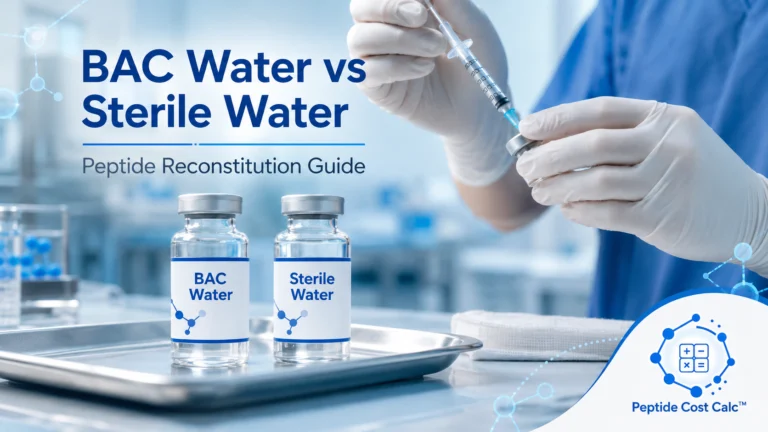
Put side by side, the reconstitution water vs bacteriostatic water comparison almost always collapses into the same answer, because reconstitution solution is usually bacteriostatic water. The real fork in the road is bac water vs sterile water, and it comes down to one question: how many times will you draw from this vial?
Draw more than once, over days or weeks, and you want a preservative, which means bacteriostatic water (or a reconstitution solution that contains it). Mix it, use it all at once, and discard the rest, and plain sterile water is acceptable. Everything else – solubility quirks, buffering – is a secondary detail that only a minority of peptides care about.
What About Saline and Deionized Water?
Two more liquids get mistaken for diluents, so let’s clear them up.
Is bac water the same as saline? No. Saline is a 0.9% sodium chloride solution. Standard saline has no preservative and is single-use, the same limitation as sterile water, unless you specifically have bacteriostatic saline. The salt content also changes the solution’s tonicity, which is not always what a given peptide wants.
Is deionized water the same as bac water? Not even close, and this one matters for safety. Deionized or distilled water is not sterile and is not formulated for injection. It belongs in a lab or a steam iron, never in a peptide vial. Never substitute it.
Which Should You Use to Reconstitute Peptides?
For most research peptides handled in multi-dose vials, bacteriostatic water is the standard and sensible default. The preservative is the entire reason it exists, and multi-dose convenience is exactly what peptide work needs.
So do you need bac water for peptides? In practice, for anything you will use across more than one session, yes – bacteriostatic water or a reconstitution solution that contains the same preservative. Reserve sterile water for single-use, large-volume situations.
Once you have chosen your diluent, the next question is how much to add, and that is a calculation, not a guess. Our BAC Water Calculator works out the exact volume for a target concentration, and the KLOW Blend Calculator and BPC-157 + TB-500 Calculator handle the common blends. The amount of water you add changes the concentration and the draw volume, so getting it right matters as much as choosing the right water.
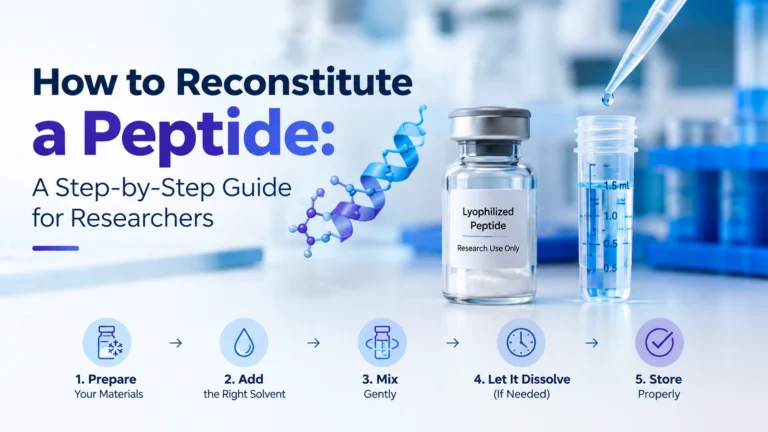
Choosing the diluent is only the first half. For the technique itself – swabbing the stoppers, running the water down the vial wall, swirling rather than shaking, and storing what you have mixed – follow our step-by-step guide on how to reconstitute peptides.
How Long Does Each Last After Opening?
Shelf life after the first puncture is the most practical difference of all. How long does bacteriostatic water last? Most labels say up to 28 days after the first entry when refrigerated, thanks to the benzyl alcohol. Sterile water, with no preservative, is single-use and should be discarded right after opening. A reconstitution solution follows whatever its label says, which usually matches bacteriostatic water if it contains the same preservative. The reconstituted peptide itself has its own, often shorter, shelf life, so the water is only half the clock.
The Bottom Line
The whole bacteriostatic water vs reconstitution solution debate usually ends in a tie, because they are typically the same thing. The decision that actually matters is bacteriostatic versus sterile: a preservative for multi-use vials, none for single-use. Read the label, match the water to how you will use the vial, and let a calculator handle the volume so your concentration is right the first time.
Frequently Asked Questions
Is reconstitution solution the same as bacteriostatic water?
Usually yes. Most reconstitution solutions sold for peptides are bacteriostatic water (0.9% benzyl alcohol) under a different name. Check the label to be sure.
Can I use sterile water instead of bacteriostatic water?
Only for single use. Sterile water has no preservative, so it should be discarded once opened rather than drawn from over several days.
How long does bacteriostatic water last once opened?
Most labels say up to 28 days after the first puncture when refrigerated, due to the benzyl alcohol preservative.
Is bac water the same as saline?
No. Saline is 0.9% sodium chloride and standard saline has no preservative, so it is single-use unless it is specifically bacteriostatic saline.
Do you need bac water for peptides?
For any peptide vial used across more than one session, yes – bacteriostatic water or a reconstitution solution containing the same preservative is the standard choice.
Calculate Your Reconstitution Volume
Once you have picked your diluent, use the free BAC water reconstitution calculator to find the exact volume for your target concentration and vial size.
Disclaimer: This article is for general informational and research purposes only and is not medical advice. Peptides referenced are research compounds. Sources: Bacteriostatic Water for Injection labeling (NIH DailyMed), benzyl alcohol monograph (PubChem, NIH), and USP water-for-injection standards. See our Sources and Methodology page.
About the editor

All content is for educational reference only. Consult a qualified professional before making any decisions based on information presented here. Medical disclaimer